Updated on
Summary Latvia on Friday announced that it was on course to join the eurozone in 2014.
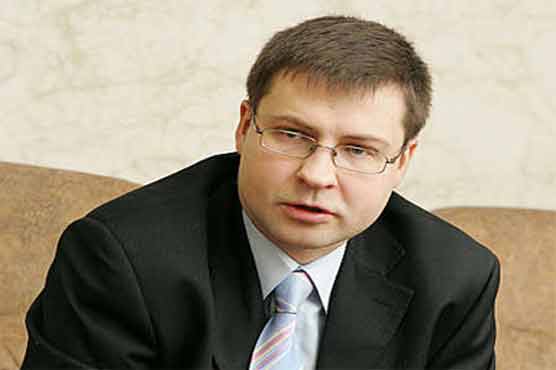
Latvia insisted that it was on course to join the eurozone in 2014, waving aside concerns about the stability of its economy which has swung from boom to bust and back to growth.I see Latvias future in the eurozone, Prime Minister Valdis Dombrovskis told a conference in Riga organised by the Latvian central bank.In one word, the eurozone means stability and growth, he added.Unfazed by the eurozone crisis, the Baltic state has kept its national currency, the lats, pegged to the euro and argues that it makes sense to join the troubled monetary bloc because its main trade partners are already members.The centre-right government has targeted January 1, 2014 for Latvia to become the eurozones 18th member and insists that the countrys figures already meet all the Maastricht criteria governing euro adoption.The criteria, set down in the 1992 Maastricht Treaty that created European economic and monetary union, include limits on a countrys deficit, debt and inflation.They have been breached by many of the countries currently using the euro -- though internal policing has been beefed up -- and in any case are a hurdle for would-be members.The only remaining obstacle appears to be whether Latvias economy -- marked in the last decade by extreme swings between growth and recession -- is now deemed to be on a sustainable path.To enter the eurozone, Latvia requires a green light from the European Central Bank and the European Commission, which is the executive body of the full, 27-nation European Union. A decision is expected in the first half of 2013.The former Soviet-ruled republic of two million has been hailed by organisations such as the International Monetary Fund as an example of how to use austerity to build a recovery, after its completion in December 2011 of a three-year, 7.5-billion-euro ($10 billion) international loan programme.The rescue plan came as Latvia tumbled into the worlds deepest recession during the global crisis, with its economy shrinking by a cumulative 25 percent in 2008-2009.The slump came in the wake of breakneck growth fuelled by easy credit and fast-rising wages after Latvia joined the EU in 2004.The austerity measures applied by Dombrovskiss government have gone far beyond those deployed in Western European nations.Growth returned last year, clocking 5.5 percent, and a similar figure is expected this year, making Latvia the fastest-expanding economy in the EU.