Updated on
Summary The poor outcome underscored slowing demand for Japanese exports.
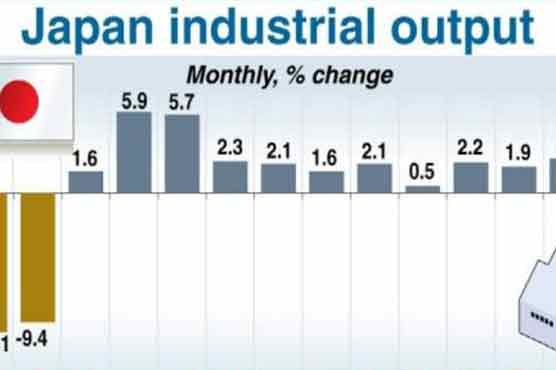
Japans factory output fell 4.1 percent last month, official data showed on Tuesday ahead of a central bank meeting expected to usher in more easing measures to stimulate the lumbering economy.The September month-on-month decline in industrial production was significantly worse than the 3.1 percent fall expected by the market, with a slump in production of cars, auto parts and machinery helping to dent output.The poor outcome for the worlds third-largest economy underscored slowing demand for Japanese exports and the impact of a diplomatic tussle with China which has hit the Asian giants trade ties.Industrial production is on a downward trend, the ministry said in a brief statement. The comment was stronger than the previous month when the ministry said output appeared to be weakening, as production fell by a revised 1.6 percent in August.The figures emerged as the Bank of Japan (BoJ), under siege from politicians clamouring for urgent action on the slowing economy, holds a policy meeting later in the day that is expected to generate further easing measures.With ultra-low interest rates already in place, the central bank may tinker with its main policy tool -- an 80 trillion yen ($1.0 trillion) asset-purchase programme.Last month, the BoJ unveiled plans to expand the fund by 10 trillion yen after pressure following similar moves by its European and US counterparts.Japans economy minister Seiji Maehara weighed into the issue again on Tuesday, calling on the central bank to usher in powerful easing to boost the economy and fight the deflation that has plagued Japan for years. But earlier expansions of the programme appear to have done little to kick-start Japans economy, which was hammered by last years quake-tsunami disaster and is also suffering from Europes debt crisis, slowing Chinese demand and the strong yen.BoJ policy action cannot cure the problem at its source, which is a lack of demand for Japanese exports, Chris Tedder, analyst at Forex.com in Sydney, said in a note.The Japanese currency hit record highs around 75 on the dollar late last year and remains strong, making exporters products more expensive overseas while shrinking the value of their repatriated foreign income.The problem is particularly acute for major export brands such as Japans automakers. Honda Motor said on Monday that the yens strength would dig into its full-year profit, now expected to be about 20 percent lower than previously forecast.Separate figures released on Tuesday showed that while quake reconstruction spending helped keep Japans jobless rate steady at 4.2 percent in September, household spending slipped 0.9 percent on-year, a sign of weakening consumer confidence.A manufacturers survey released on Tuesday with the production data forecast a 1.5 percent decline in Octobers factory output before rising 1.6 percent in November. But Hideki Matsumura, senior economist at the Japan Research Institute, cast doubt on the likelihood of a late-year turnaround.Trends show that figures will tend to fall below expectations, he told Dow Jones Newswires.Japan recently posted its worst September trade figures in more than 30 years, as the territorial dispute with Beijing over an island chain in the East China Sea hurt exports amid a global slowdown. The long-standing dispute over the archipelago, called the Senkakus in Japan and Diaoyu islands in China, erupted anew after Japan nationalised the chain in mid-September.Japanese factories and businesses across China closed or scaled back operations in September over fears they or their workers could be targeted by mobs protesting against Tokyos move.The spat has led to thousands of flights being cancelled between the nations, while Japans top three automakers -- Toyota, Nissan and Honda -- said their sales plunged last month in China, the worlds biggest vehicle market.