Updated on
Summary The 35-year-old Kerviel says he was a scapegoat for the bank and a victim of a financial system.
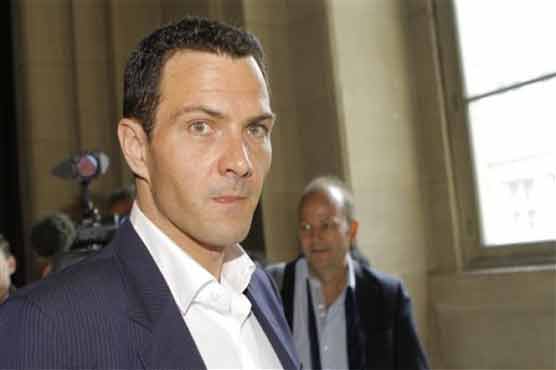
The Paris appeals court on Wednesday ordered former Societe Generale trader Jerome Kerviel to spend three years in prison and pay back a staggering €4.9 billion (about $7 billion) in damages for one of the biggest trading frauds in history.The 35-year-old Kerviel, who never profited personally from his unauthorized trades, says he was a scapegoat for the bank and a victim of a financial system that runs on greed and profits. His lawyer David Koubbi called the verdict absolutely lamentable and said his team will consider taking the case to Frances highest court.Because Kerviel cannot realistically pay the money back in his lifetime, the bank suggested it would refrain from seeking full repayment.A lower court convicted Kerviel in October 2010 of forgery, breach of trust and unauthorized computer use for covering up bets worth nearly €50 billion more than the market value of the entire bank in 2007 and 2008.By the time his trades were discovered in early 2008, when banks were sliding into a global crisis, had amassed losses of almost €5 billion on those bets.The sentence a five-year prison term, with two years suspended, plus the payback of all the losses he incurred shocked many in the French public. After a global financial crisis that many blamed on big banks, many believed Kerviels claim that he was a victim of an unjust system.The appeals court Wednesday upheld the full conviction and sentence. It did not send Kerviel directly to prison, leaving him free pending his decision on whether to appeal to the Court of Cassation. He has five days to make that decision.Kerviel arrived at the courthouse in a dark suit and looking tense and left through a back entrance without speaking to reporters. He had sought an acquittal, saying the bank had turned a blind eye to his exorbitant trades as long as they made money. Prosecutors and the bank say that isnt true.Societe Generale lawyer Jean Veil said the verdict was a great satisfaction.He suggested the bank would take into account Kerviels income and assets and not try to make him pay back the full fine. Societe Generale will look at it with realism, Veil told reporters.He indicated, however, that the bank could take over royalty earnings from a book Kerviel wrote about the scandal as well as any income he earns from movie deals. It would have been indecent for Mr. Kerviel to be able to preserve revenues coming from the exploitation of his fraud.While Societe Generale could have the right to tap Kerviels future income, it was not clear whether they would do so and how much they could take from him.Kerviel was fired from the bank in the wake of the scandal, and held a modest job for a while as a computer consultant. He was unemployed at the time of his appeals trial earlier this year.A colleague from Societe Generale who testified on Kerviels behalf said the court didnt take into account others at the bank who likely knew about Kerviels risky bets.A junior futures trader such as Kerviel could in no case do what he did without being seen by his superiors, Philippe Hoube said. If justice had played its role, they wouldnt have sentenced him so heavily.